Maimonides
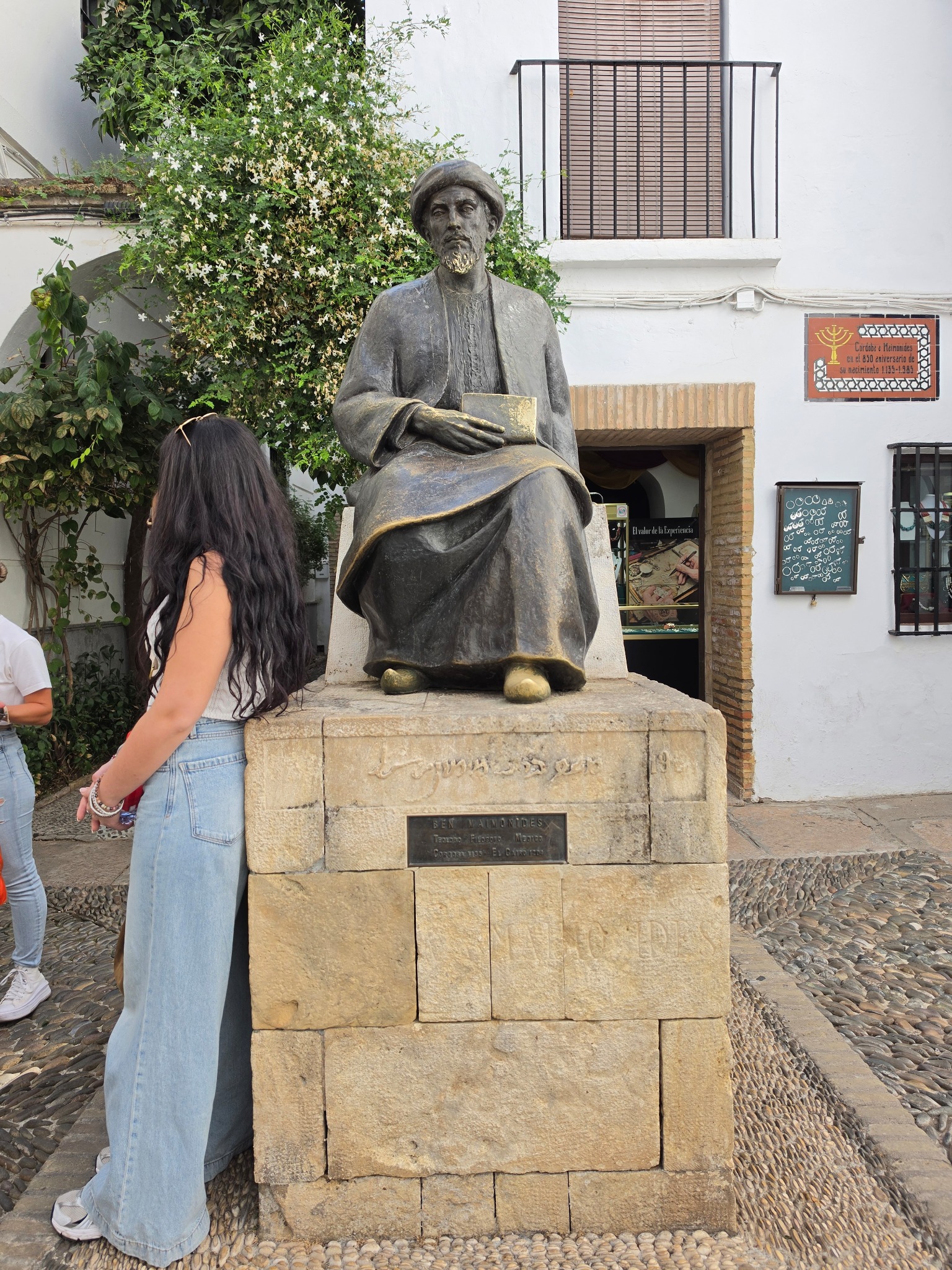
Born in Córdoba in the 12th century, Moses Maimonides became a physician, legal scholar and one of Judaism's most influential philosophers. His work treated reason and philosophy as essential companions to religious understanding.
How many histories live inside one person?
Granada had left me thinking about endings.
A kingdom surrendered. Religious identity became something authorities could question. People converted, fled, adapted, concealed, remembered.
Then I came to Córdoba.
Here, the question felt different.
Not: What happens when one world ends?
But: What happens when so many worlds occupy the same ground that no single one can completely claim what the place became?
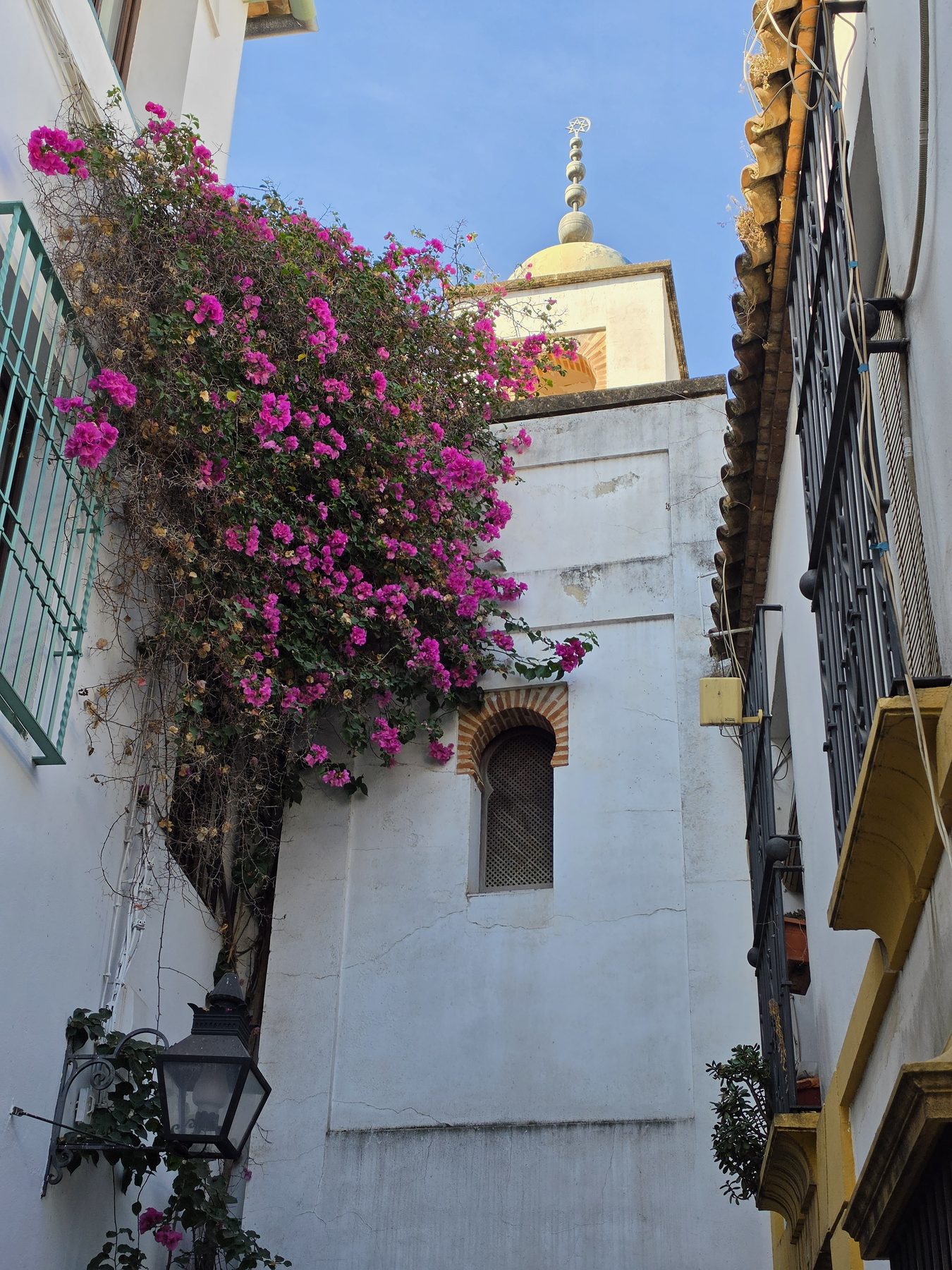
Córdoba in the present tense: a lived city layered over its past.
From the road · walking Córdoba, one surface at a time.
There is a temptation when telling history to divide people neatly.
Muslim. Christian. Jew. Roman. African. European. Conqueror. Conquered. Migrant. Native.
But Córdoba resists neatness.
For centuries, different peoples arrived here, governed here, worshipped here, studied here, traded here, built here, raised families here—and eventually disappeared into populations that came afterward.
I saw a banner proclaiming someone “Cordoban from head to toe.” I do not know what its owner meant by it, and I do not want to impose a meaning that was not there. But it sharpened a simpler question: what makes us who we are?
Long before the caliphate, Córdoba had been shaped by Rome and by the peoples who followed.
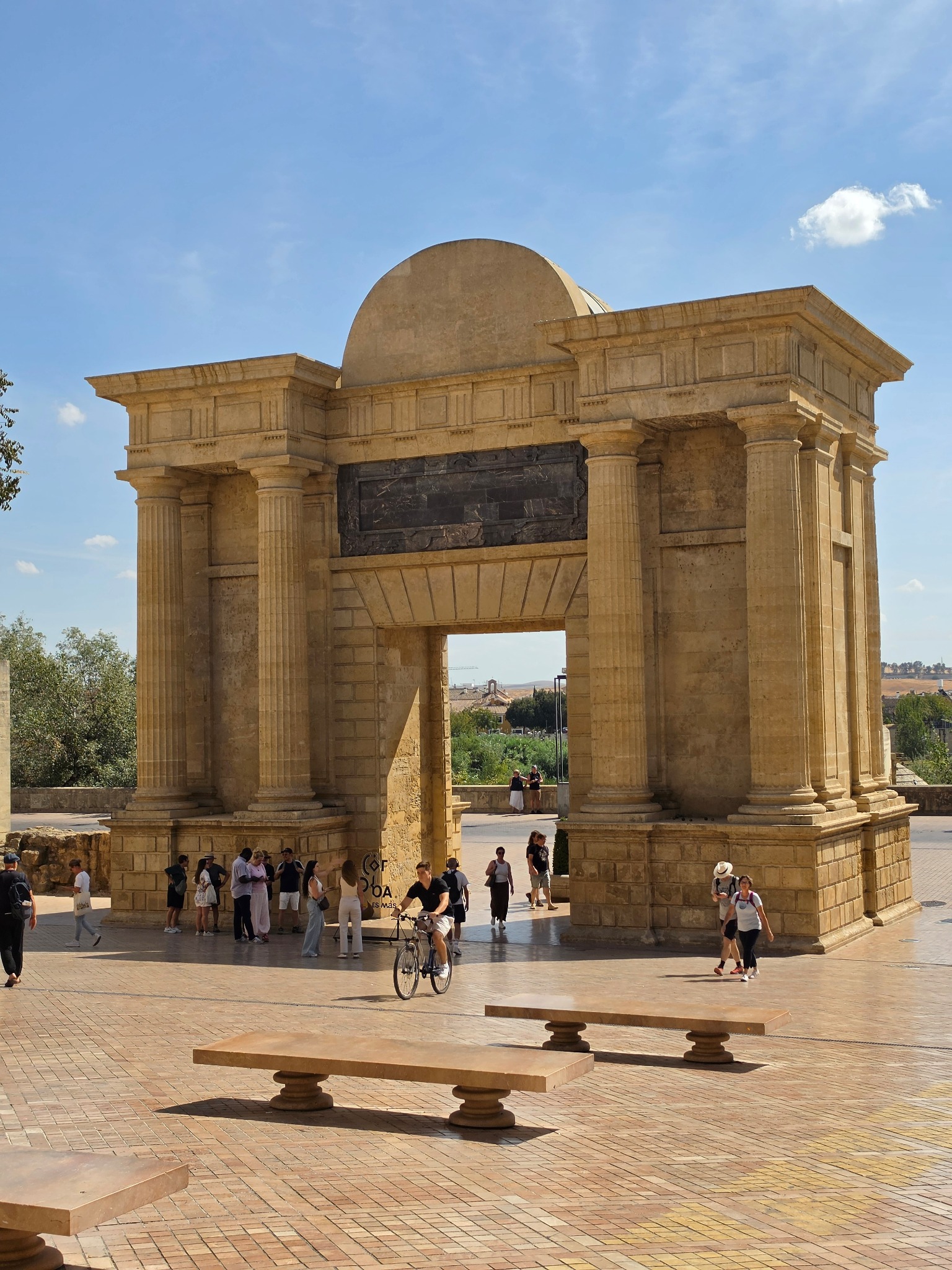
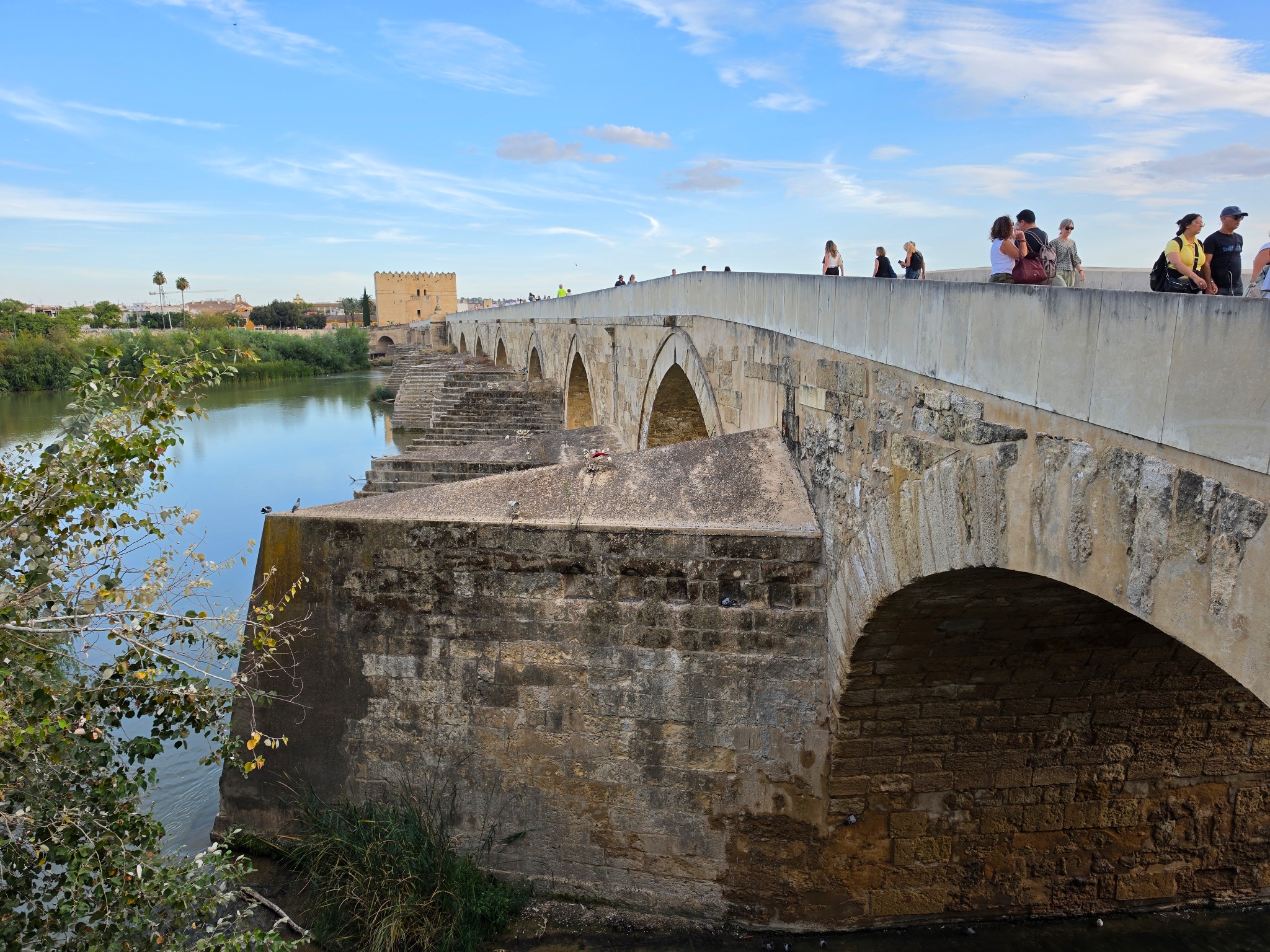
Under Rome, Córdoba became one of the major cities of southern Iberia. The bridge, monumental gateway and surviving columns still place that earlier city inside the Córdoba of today.
Later came Visigothic rule. Then, in the eighth century, Muslim armies entered Iberia and another Córdoba began to take shape.
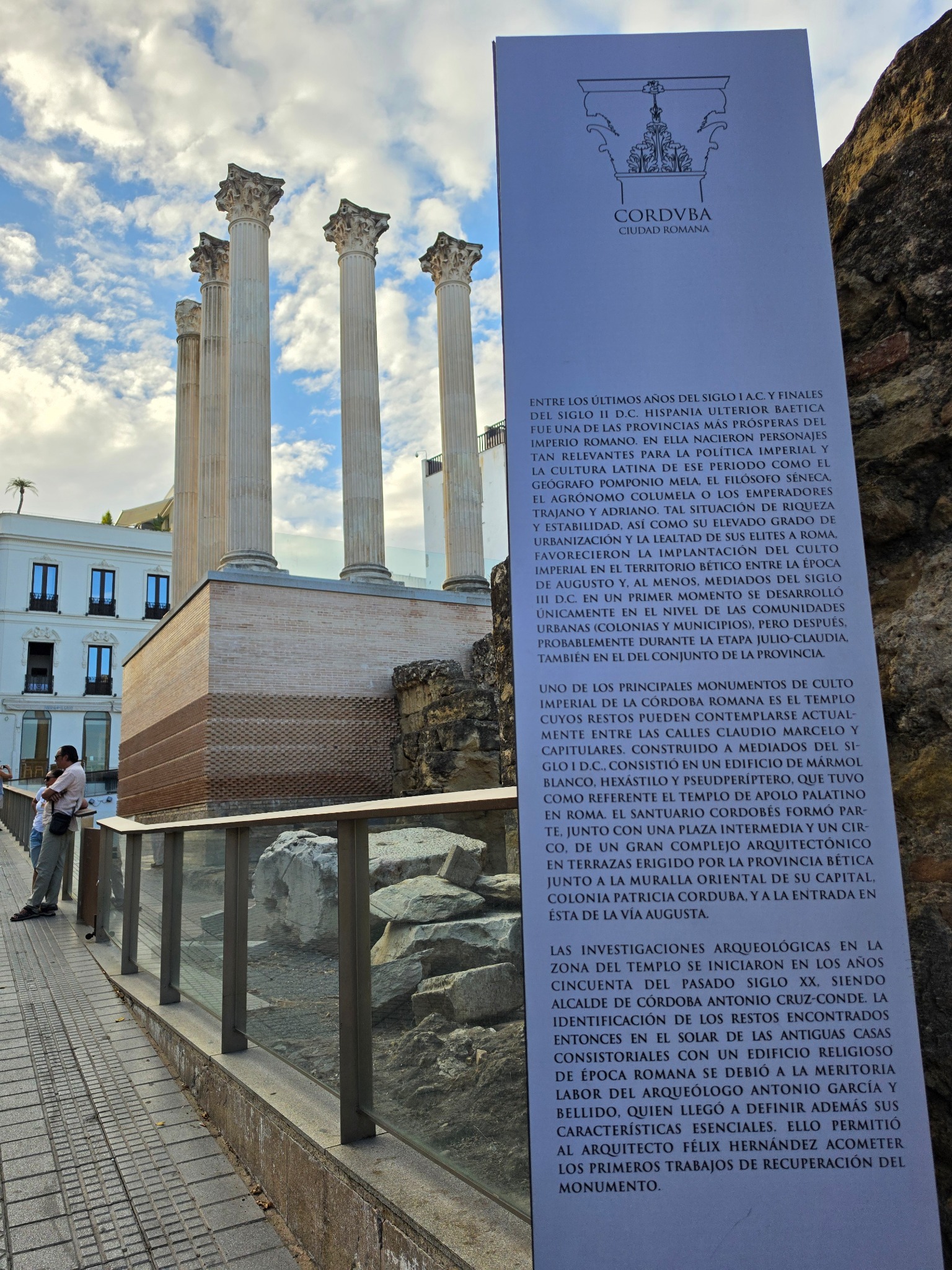
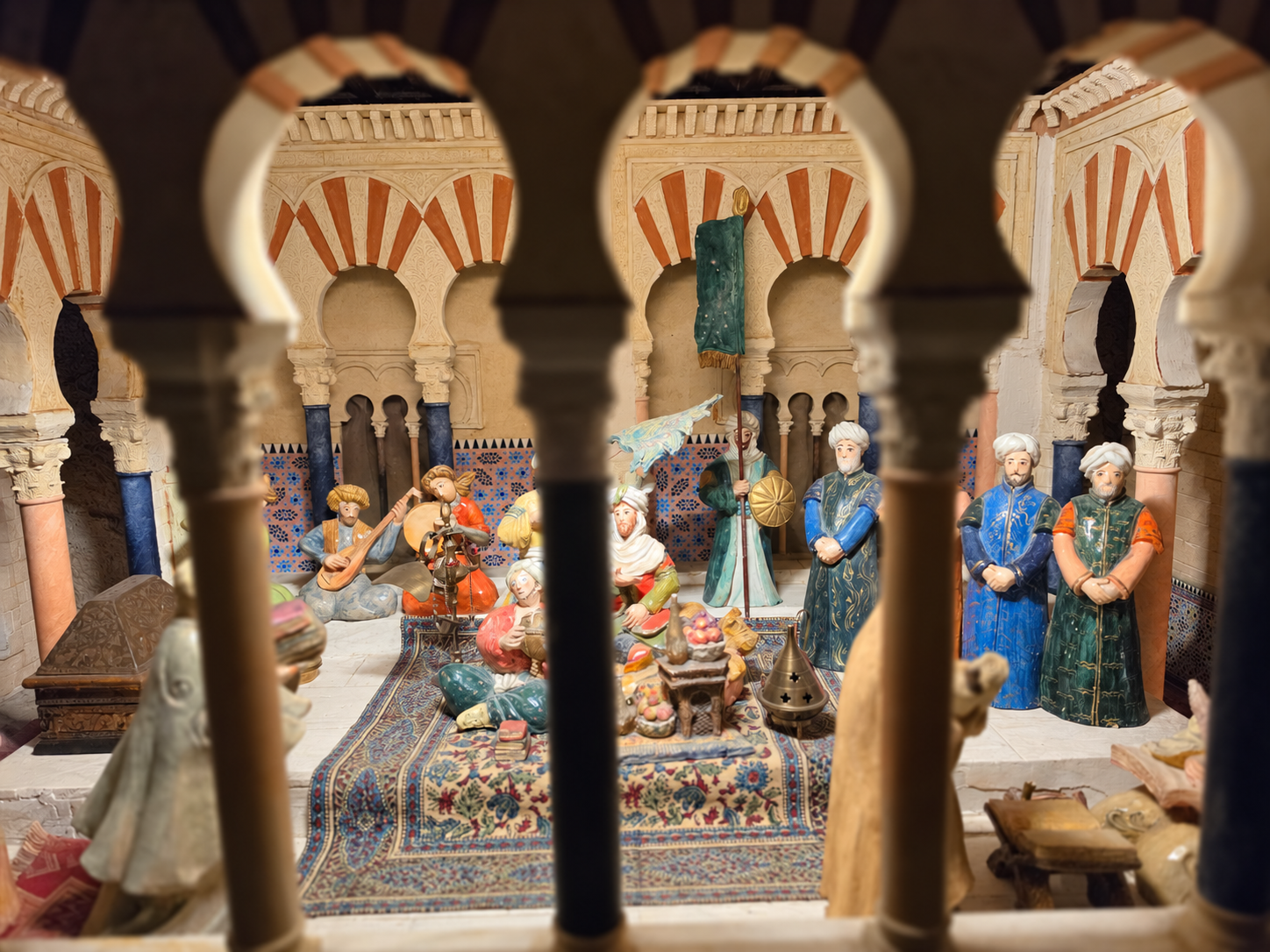
Under the Umayyads, Córdoba became a political and intellectual center connected to a wider Mediterranean world.
Libraries, medicine, philosophy, astronomy, poetry, law and commerce all formed part of Córdoba's intellectual life.
Knowledge moved across languages, courts, political boundaries, and religious traditions, making Córdoba part of a wider world of exchange.
A court image depicts an exchange involving Caliph Abd al-Rahman III and the Byzantine world. The emperor's representative is largely obscured at the far left; only part of the white robe is visible.
The accompanying museum explanation described a Byzantine gift of Dioscorides' botanical treatise to the caliph's court—one small example of knowledge moving between distant centers of power.
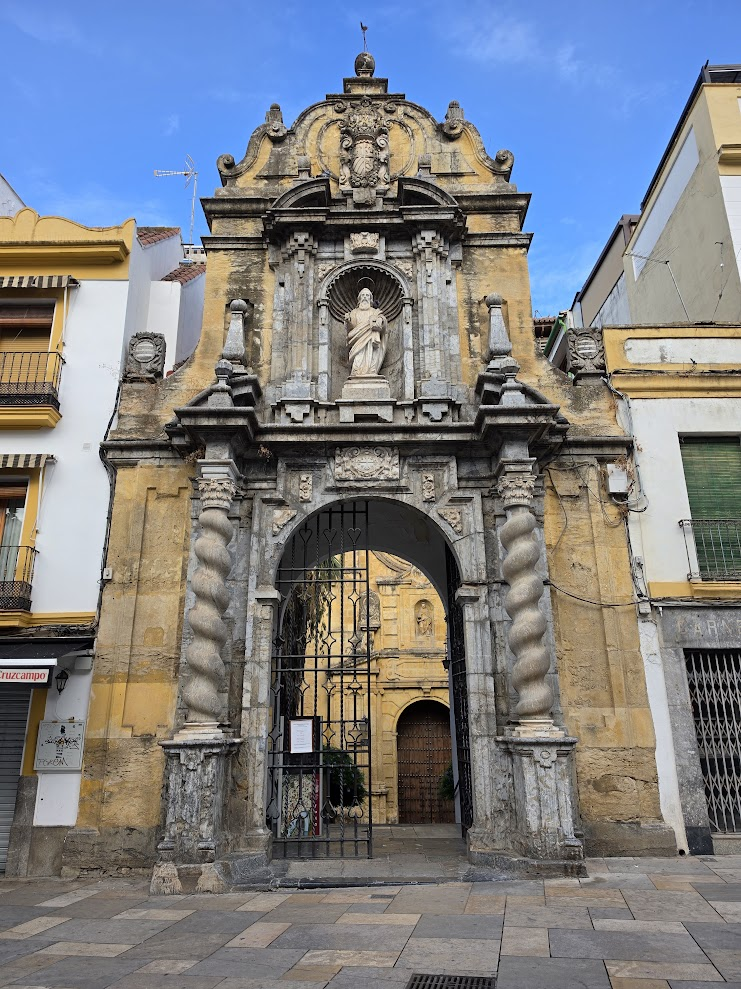
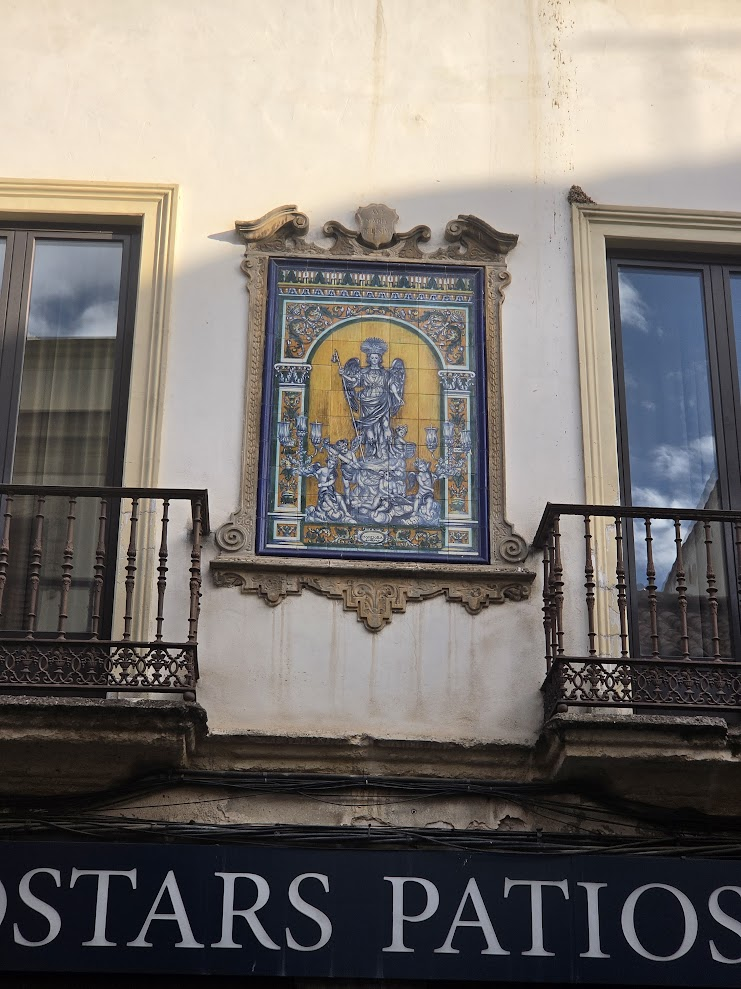
Córdoba came under Christian rule in 1236. The great mosque was consecrated as a cathedral, while churches, chapels and other Christian institutions became part of the city that followed.
The result was not a clean replacement of one Córdoba by another. Christian Córdoba inherited, adapted and built within a city already shaped by centuries of earlier history.
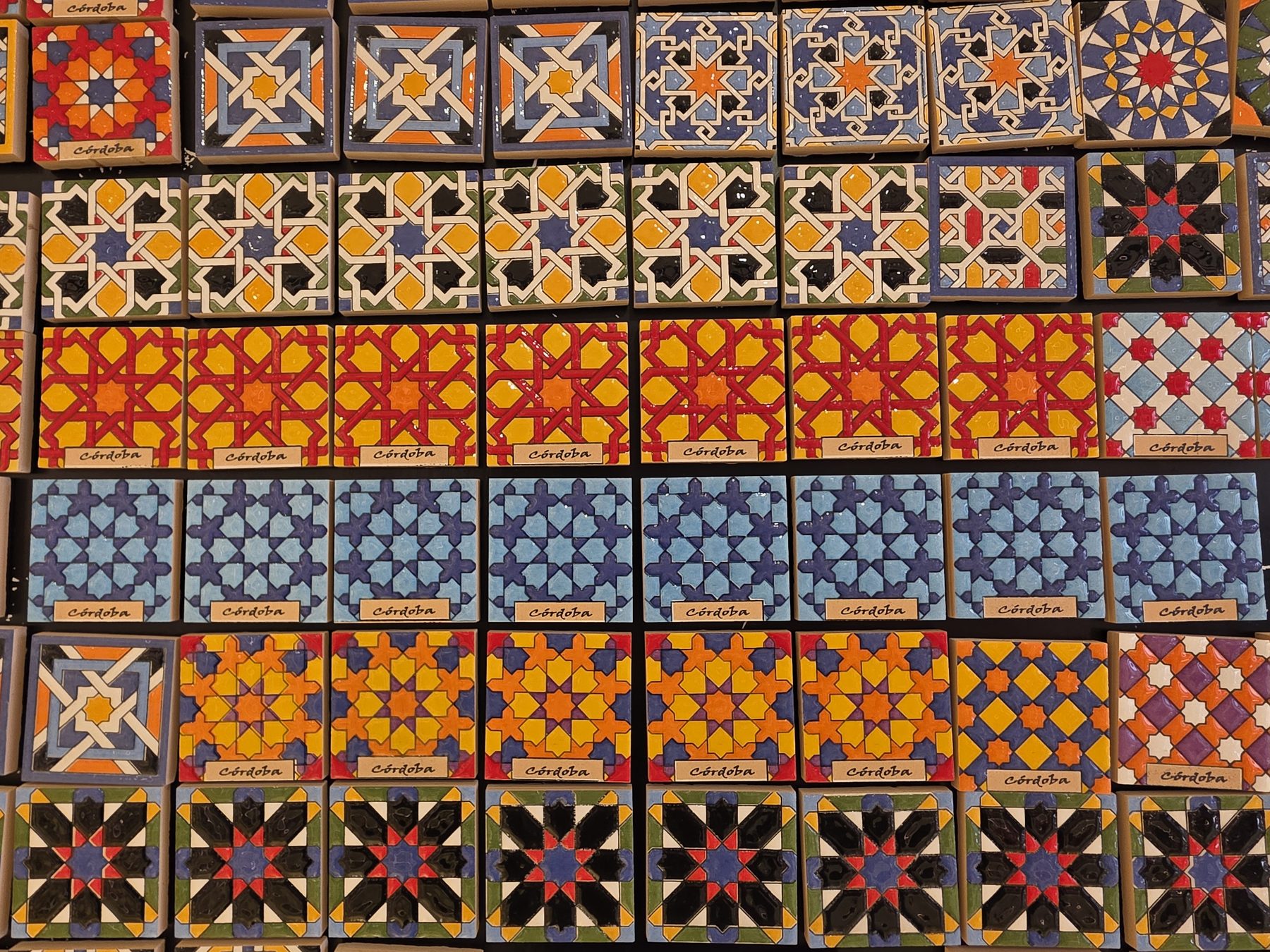
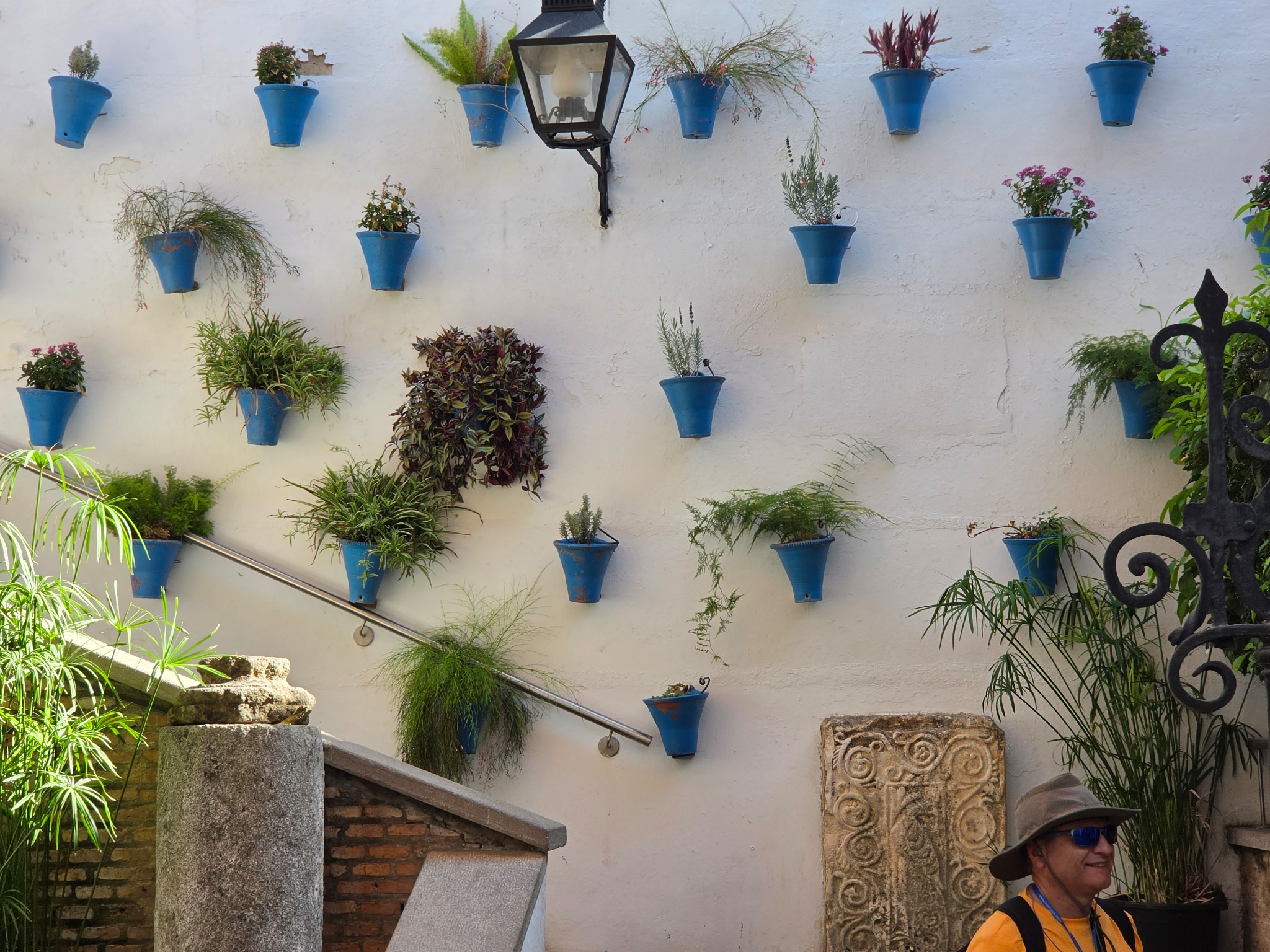
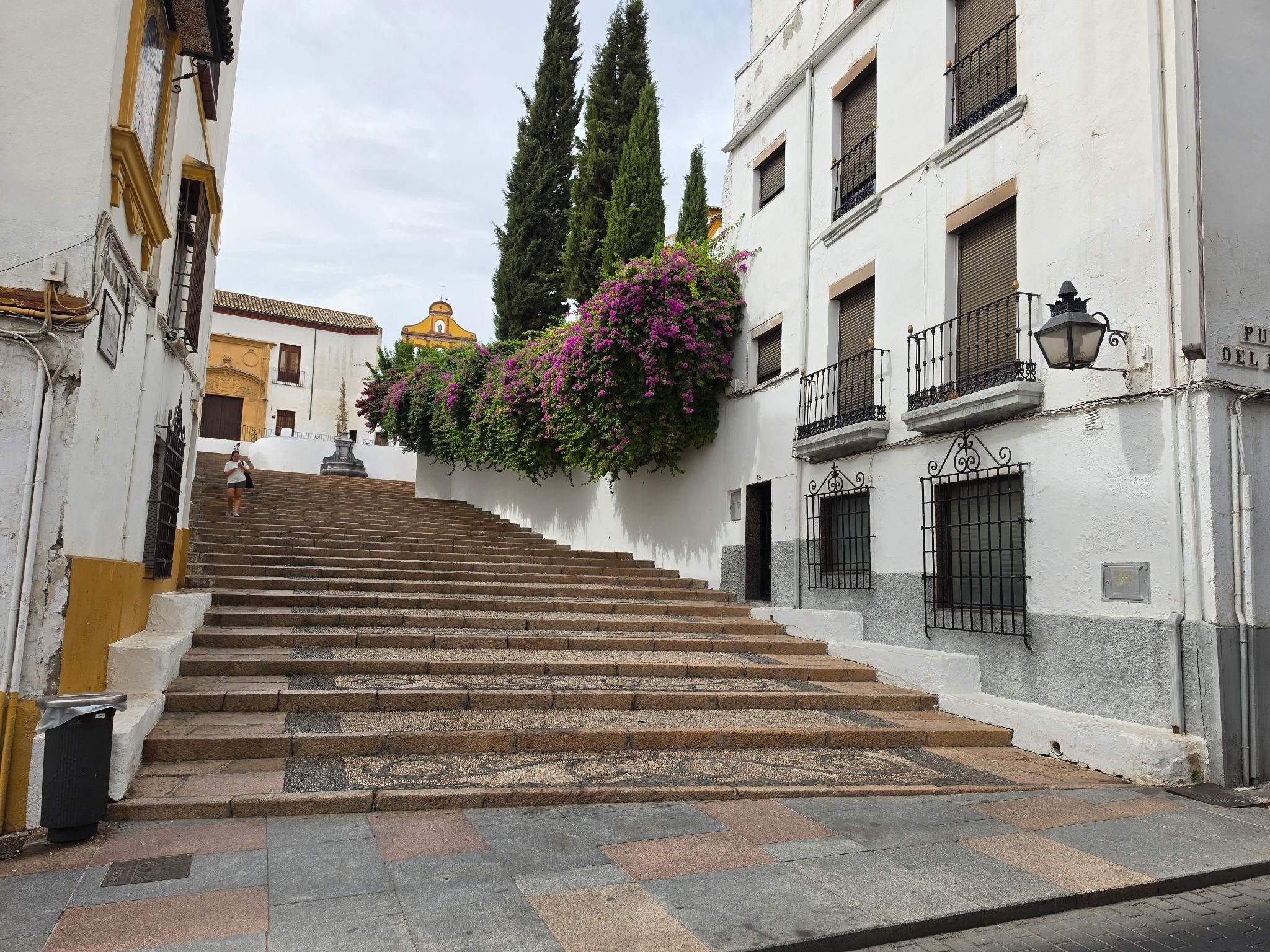
Books and monuments can tell me what happened here. Daly could tell me what Córdoba feels like to someone who lives here.
My conversation with Daly brought the question into the present. She spoke about the different peoples who formed Córdoba’s community—and about their continuing place in the city’s identity.
“It was a mixture of all these people … they are the people who formed our community and they continue forming part of our community today.”Daly · Córdoba field conversation
Córdoba's Jewish history is one part of the city's longer story of people leaving, carrying memory, and reshaping life elsewhere.
Born in Córdoba in the 12th century, Moses Maimonides became a physician, legal scholar and one of Judaism's most influential philosophers. His work treated reason and philosophy as essential companions to religious understanding.
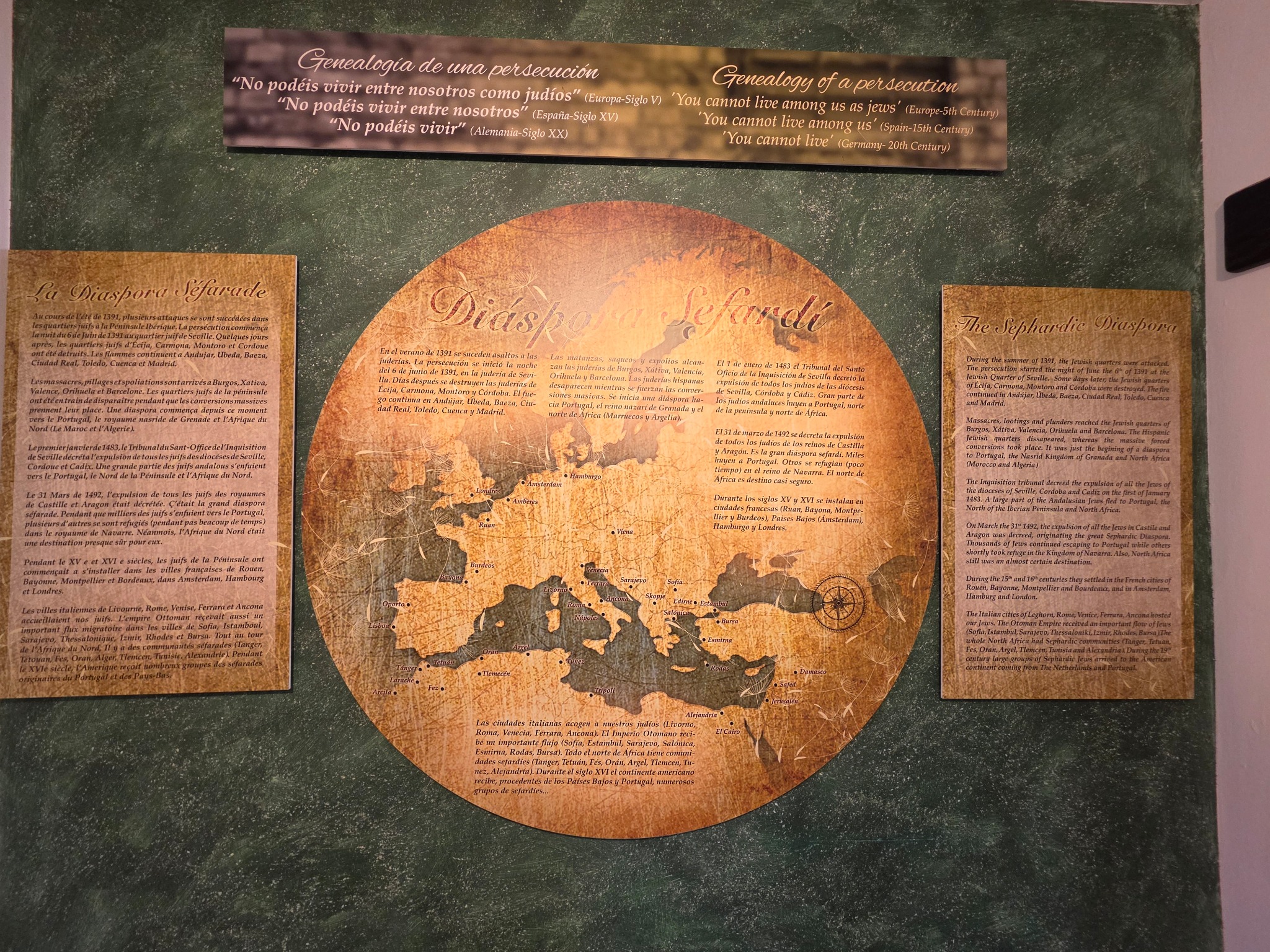
The Sephardic diaspora makes one movement visible, but diaspora is not one people's story alone. Across history, peoples have scattered, resettled, carried memory with them and changed the places where they arrived.
A Sephardi performance recorded in Córdoba.
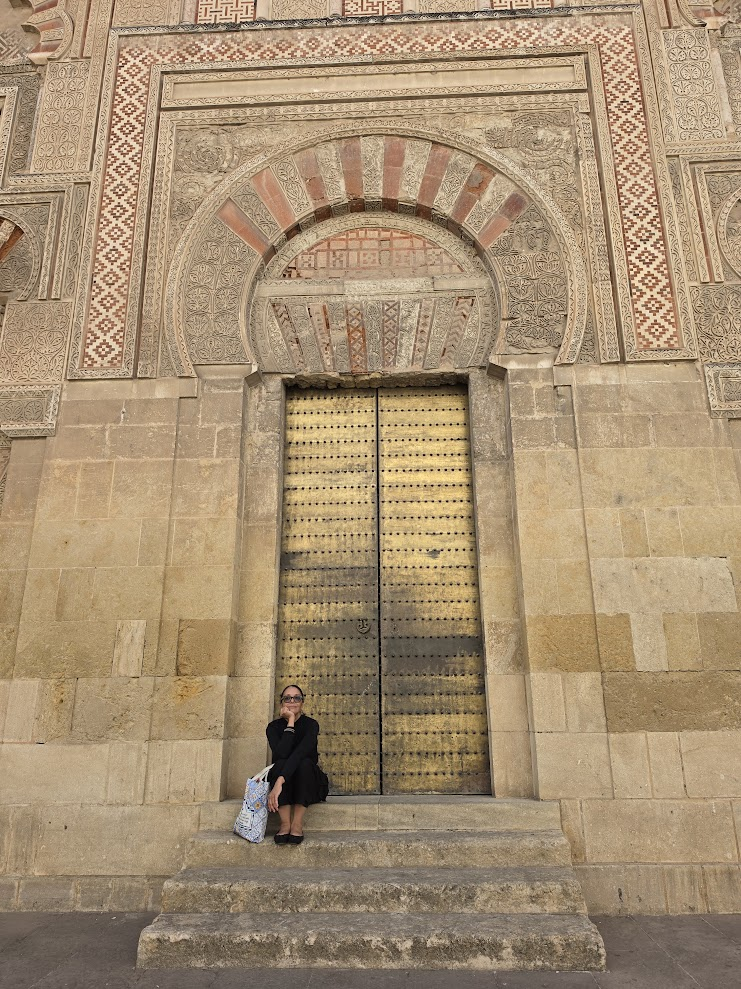
What makes us who we are—and how much of that story began long before the labels we use now?
From here, the journey turns toward Palos de la Frontera and the Atlantic crossing of 1492.
From Córdoba, the route moves west to the place from which Christopher Columbus sailed in 1492.
Palos turns the journey from the layered histories of Iberia toward the Atlantic crossing that would transform the Caribbean, the Americas and the world.
What happens when one departure sets consequences in motion far beyond anything the people standing on the shore could have imagined?
These notes distinguish personal observation, recorded conversations, museum interpretation and historical reference. A field photograph records what was visible during the visit; a caption or display does not by itself establish every claim about the past.
The chapter draws on Fe Bencosme’s September 2026 photographs, recordings and reflections, including the conversation with Daly on 29 September. A recorded speaker’s account is presented as that speaker’s perspective.
Córdoba’s Roman, Visigothic, Islamic, Jewish and Christian histories overlap in the surviving city. “Coexistence” should not imply uninterrupted equality or harmony. The Sephardic diaspora is one part of a much wider history of migration; it does not establish a particular traveler’s ancestry.
Field photographs, interview footage, the Sephardi performance and the recorded reflection retain their existing captions. Museum maps and panels are field sources; the surviving object and the museum’s explanation should be distinguished.
Córdoba’s history spans Roman, Visigothic, Islamic, Jewish and Christian periods, among others. References to medieval coexistence should not imply uninterrupted equality or harmony among religious communities.
The Mosque-Cathedral developed over several historical phases. The mosque begun under Abd al-Rahman I was repeatedly expanded; after the Christian conquest of Córdoba in 1236, it became a cathedral. Later Christian architectural interventions included major Renaissance additions.
The chapter’s broad historical framing is checked against UNESCO’s description of the Historic Centre of Córdoba and its Urban Heritage Atlas. Museum panels photographed in the field are treated as field sources rather than final authority.
UNESCO World Heritage Centre · Historic Centre of Córdoba
UNESCO Urban Heritage Atlas · Córdoba